A New Era in Heating Costs and Wood Pellets
Recent volatility across global energy markets has made home heating and business climate control the single largest recurring winter expense. Especially for detached residences, rural settlements, mountain chalets, and commercial workshops lacking direct natural gas network connections, the search for an economical, clean, and convenient heating solution dominates every pre-winter discussion.
Worldwide, pure pine wood pellets have emerged as the premier biomass answer. Yet consumers rightly ask: Does wood pellet heating truly deliver the substantial savings claimed, or is it merely marketing hype? In this engineering analysis, we examine empirical thermal data, net calorific calculations, and 2026 heating benchmarks to uncover the genuine economics of wood pellet heating.
Net Calorific Value: How Much Heat Does 1 kg of Pine Pellets Deliver?
The most common pitfall in comparing fuel options is looking only at the gross purchase price per bag or ton. In thermal engineering, there is only one objective benchmark: "Net usable heat energy delivered per currency unit (kWh/€ or kcal/unit)".
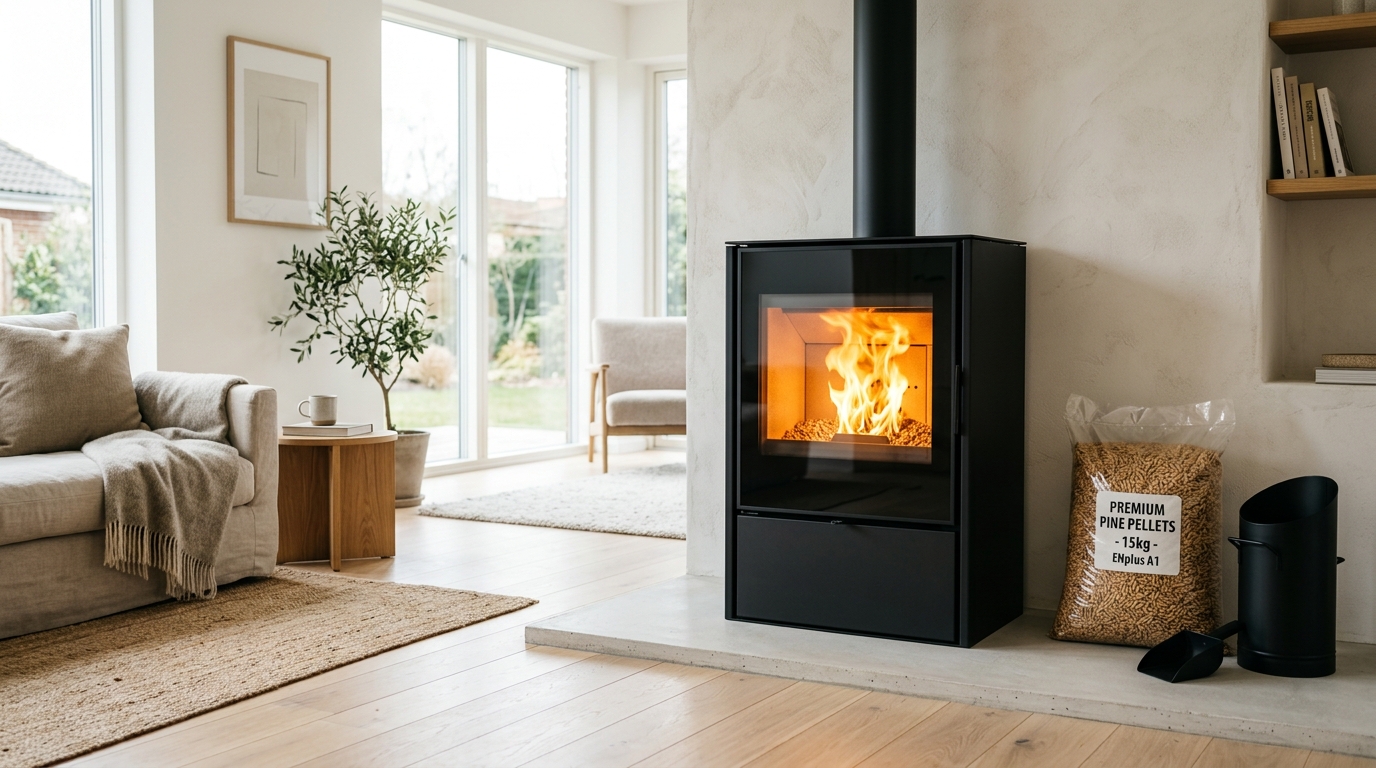
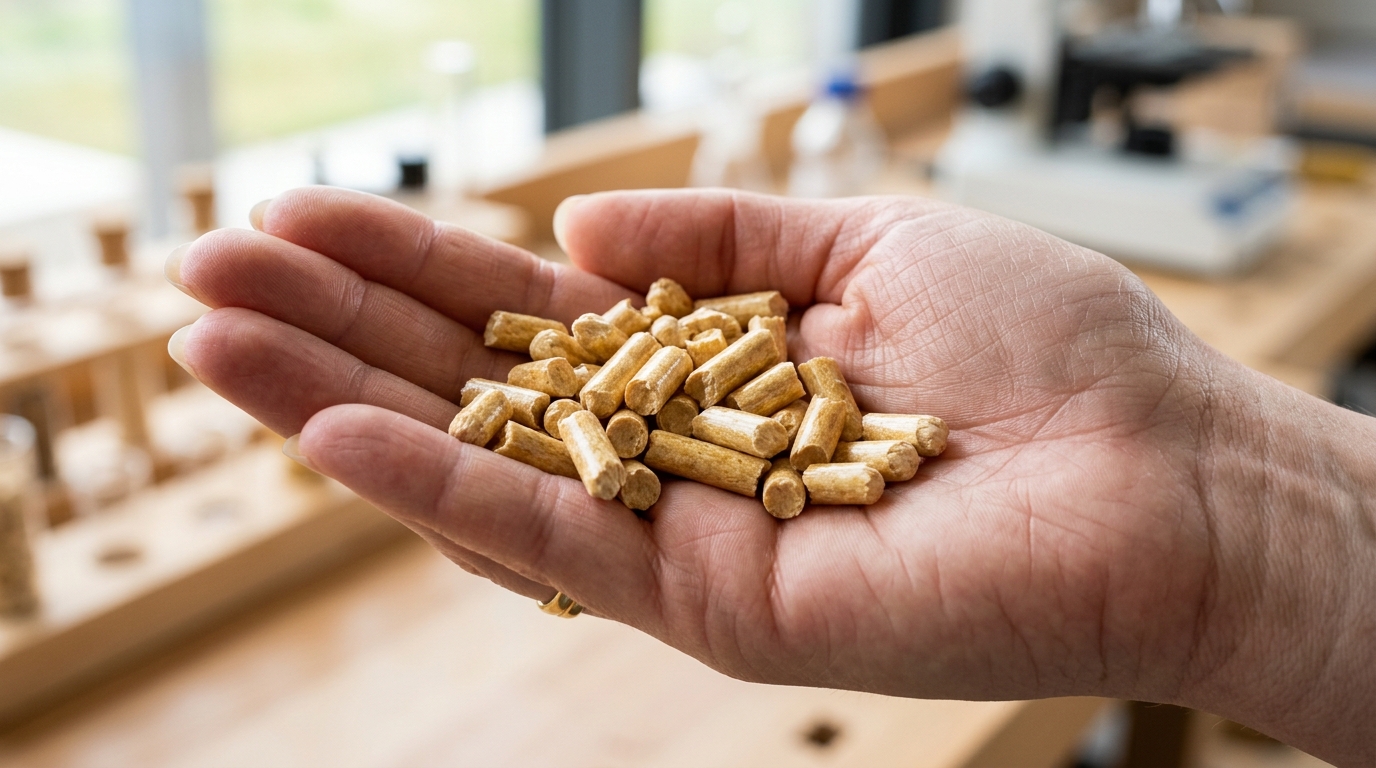
At PELETİCAL's Çorlu manufacturing facility, 100% pure pine pellets engineered to strict ENplus A1 norms achieve the following certified parameters:
- Net Calorific Value (LHV): ≥ 4.9 kWh/kg (≥ 4,250 kcal/kg)
- Moisture Content: ≤ 7.5% (compared to 20-30% in seasoned firewood, pellet moisture is negligible)
- Ash Content: ≤ 0.7% (almost the entire combustible mass is converted directly into thermal energy)
In practical terms: 2 kg of high-density pine pellets produce net thermal energy equivalent to approximately 1 cubic meter of natural gas or 1 liter of heating oil. Compared to seasoned oak or beech firewood, 1 ton of compressed pellets replaces 4 to 5 cubic meters of logs because firewood expends one-third of its heat just boiling away internal moisture.
2026 Comparative Energy and Cost Matrix
The table below summarizes the fuel required to generate 10,000 kcal of net residential heat, factoring in typical system operating efficiencies:
| Fuel Type | Unit Energy / Calorie | System Combustion Efficiency | Required for 10,000 kcal | Efficiency & Economic Advantage |
|---|---|---|---|---|
| 100% Pure Pine Pellets | 4.9 kWh/kg (4,250 kcal) | 92% – 95% | ~2.45 kg | Optimal Balance & Ultra Efficiency |
| Imported Coal / Anthracite | 6,000 – 6,500 kcal/kg | 55% – 65% | ~2.70 kg (with losses) | High ash (15-20%), clinker, soot, and labor |
| Natural Gas (Grid) | 8,250 kcal/m³ | 90% – 93% | ~1.30 m³ | Practical where grid exists; impossible off-grid |
| Seasoned Hardwood Firewood | 2,800 – 3,200 kcal/kg | 50% – 60% | ~5.50 kg | High storage volume, variable moisture, low yield |
| Electric Resistance / Boiler | 860 kcal/kWh | 98% | ~11.8 kWh | Highest Operating Cost |
System Efficiency: Heat Retained Indoors Instead of Lost via Chimney
The secret behind the economic superiority of wood pellets lies in the engineered mechanics of modern pellet stoves and boilers. In traditional cast-iron fireplaces and coal stoves, nearly 40% of generated heat escapes uncontrollably out the flue pipe. Restricting the chimney damper causes incomplete combustion, heavy creosote, and dangerous carbon monoxide.
Pellet appliances operate on a fundamentally superior thermodynamic principle:
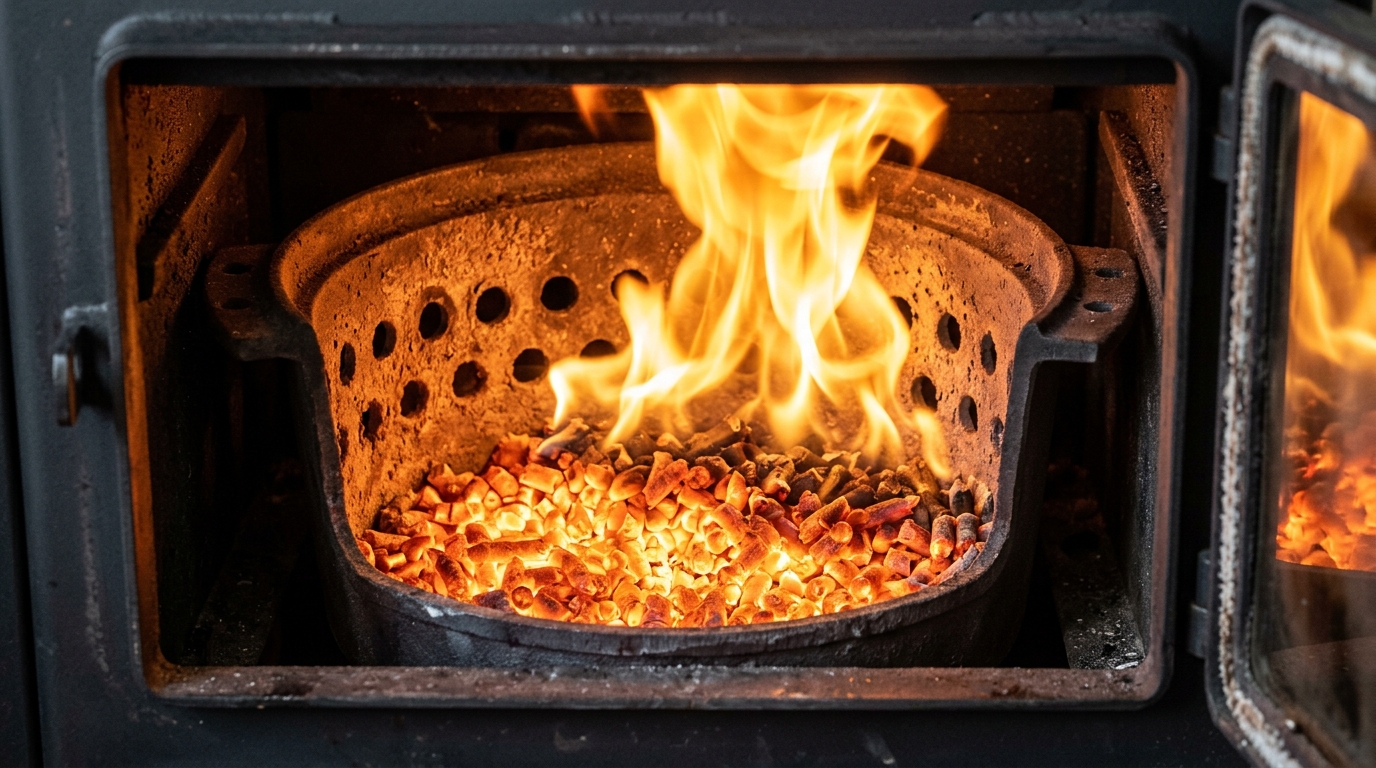
- Forced-Draft Oxygen Modulation: Microprocessor fans inject precisely the required volume of primary and secondary combustion air, guaranteeing a lean, clean burn.
- Multi-Pass Heat Exchangers: Flue gases pass through tubular heat exchange banks before exiting, lowering exhaust temperatures from 400°C (coal) down to 110-140°C.
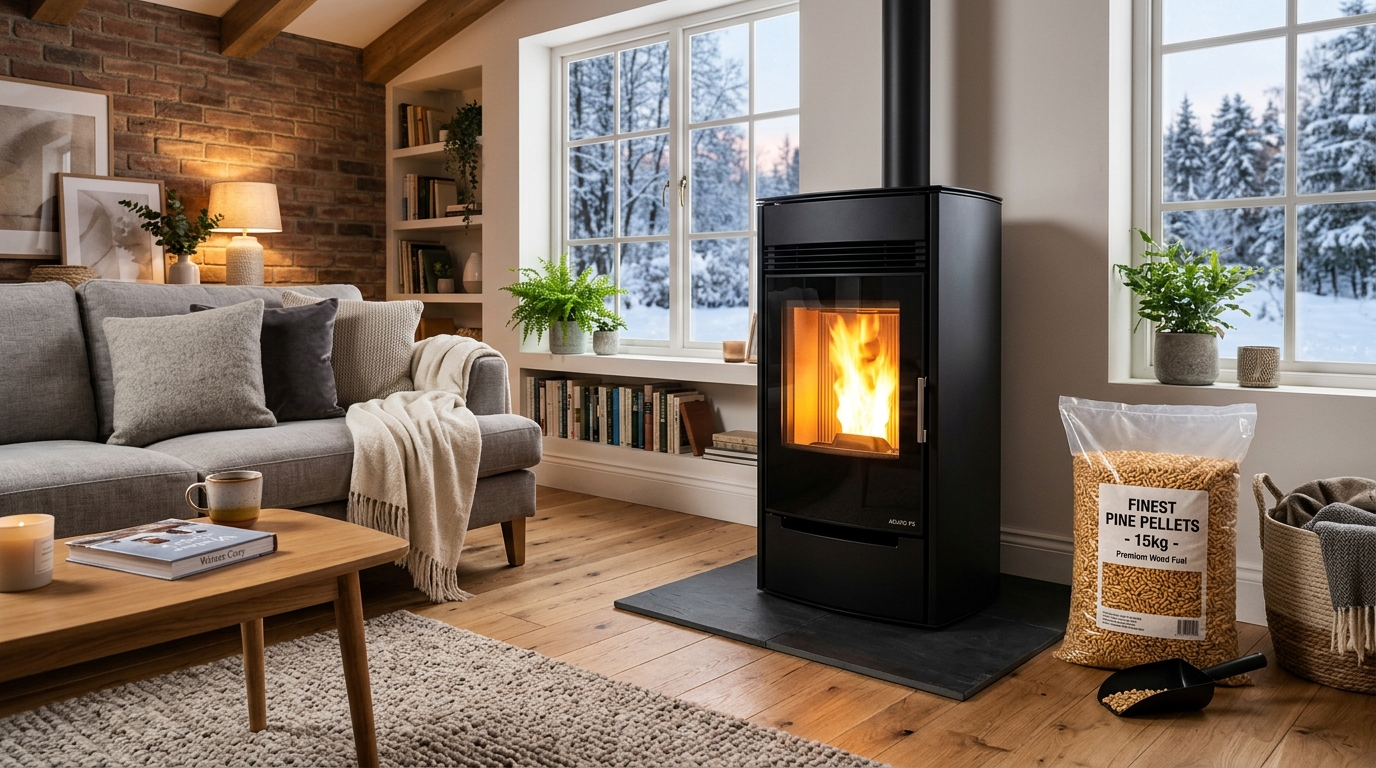
- Digital Thermostatic Control: When the ambient space reaches your target 22°C, the stove drops automatically to low-fire modulation (0.6 kg/h), eliminating wasteful overheating.
Seasonal Heating Calculation for a 120 m² Home (5 Months)
Consider a standard insulated 120 m² home in the Marmara or Balkan climate over a 150-day winter season (November through March):
- Average Daily Run Time: 12 hours (morning and evening high fire, night eco-modulation)
- Average Hourly Fuel Rate: 1.0 – 1.2 kg/hour
- Daily Consumption: ~12 – 14 kg (less than 1 bag of 15 kg per day)
- Monthly Requirement: ~25 – 30 bags (approx. 400 – 450 kg)
- Full 5-Month Season Total: ~1.5 Pallets (approx. 105 bags / 1,575 kg)
Meeting this same heating load with electric panel heaters would cost 2.5 to 3 times more. When compared to coal, even if bag prices appear competitive, the 20% coal ash residue, heavy soot scrubbing, and labor make pine pellets far more cost-effective overall.
Return on Investment (Payback Period)
Homeowners replacing bottled LPG heating, electric boilers, or diesel oil with an automated pellet stove typically amortize the initial equipment purchase in 1 to 2 heating seasons entirely through monthly operating fuel savings.
Expert Advice: Maximizing Your Heating Savings
- Insist on ENplus A1 Certified Pine Pellets: Bargain pellets with bark or recycled construction wood form clinker and cause stove lockouts.
- Use Weekly Timer Programming: Lower room temperature to 19°C overnight and ramp to 22°C thirty minutes before waking.
- Store Bags in Dry Conditions: Never stack bags directly on cold concrete floors; always elevate on pallets to block condensation.
Frequently Asked Questions
1 çuval (15 kg) pelet kaç saat yanar?
Ortalama bir pelet sobasında 15 kg çam peleti, seçilen alev kademesine ve ortam yalıtımına bağlı olarak 12 ila 24 saat arasında kesintisiz ısınma sağlar.
Pelet yakıtı elektrik kesilirse yanmaya devam eder mi?
Otomatik pelet sobaları helezon motoru ve duman fanı için küçük miktarda (50-80 Watt) elektrik tüketir. Elektrik kesintilerinde kesintisiz güç kaynağı (UPS) kullanarak sobanızı saatlerce çalıştırmaya devam edebilirsiniz.
Toptan palet alımı neden daha avantajlı?
1 palet (70 çuval / 1.050 kg) pelet aldığınızda hem birim çuval fiyatı perakendeye göre çok daha ekonomik olur hem de nakliye tek seferde sigortalı olarak kapınıza teslim edilir.
DIRECT FROM PRODUCER TO YOUR DOOR
Heat Safely with Premium Pine Pellets
Order 15 kg weather-resistant bagged pallets or request factory-direct wholesale truckload pricing.
03 RELATED GUIDES